

Office furniture cycles slowly, so most "trend" lists describe things that have been true for years. The changes that matter are the ones showing up in tenders and specification documents — because that is where demand actually becomes volume.
1. From assigned desks to bookable settings
Hybrid schedules mean average occupancy well below headcount on any given day. The response is not simply fewer desks; it is a wider mix of settings — focus seats, collaboration tables, phone booths, touchdown points — with booking layered on top. For furniture, this rewards items that are easy to clean, hard to personalise, and identifiable in a booking system. It penalises anything with a fixed personal footprint.
2. Modular platforms over single-purpose models
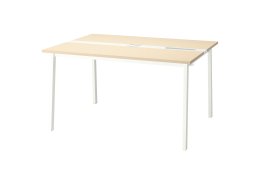
Benching systems that accept screens, power, storage and height adjustment from a common frame let a floor be reconfigured without new procurement. The commercial argument is straightforward: one platform specified once can absorb a 20% layout change, while a set of single-purpose desks cannot. Expect more systems where the leg frame is standard and the top, screen and accessories are options.
3. Acoustic-first design
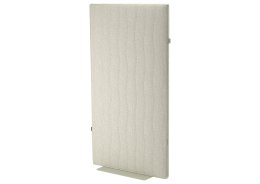
Acoustics has moved from an afterthought to a specification line item, and furniture is carrying more of that load — screens with real absorption, pods as standard equipment rather than a premium, soft seating positioned to separate zones. The trend is less about new products than about acoustic performance appearing in the specification with a number attached.
4. Recycled and low-carbon content
Recycled aluminium frames, recycled PET felt, and board from certified or reclaimed fibre are now common enough to be priced competitively rather than as a premium option. Buyers are asking for Environmental Product Declarations (EPDs) rather than general sustainability statements. The practical consequence: if a supplier cannot state recycled content by weight per product, they will increasingly lose tenders on documentation alone.
5. Repairability and spare parts as a selling point
Right-to-repair expectations are reaching commercial furniture. Products designed with replaceable castors, accessible gas lifts and standard control boxes hold resale and extension value. A ten-year warranty means little if the control box is discontinued in year three. Expect "spares available for X years" to become a standard question in RFQs.
6. Height adjustment as standard, not premium
Sit-stand has moved down the price curve. In new fit-outs it is increasingly the default for assigned desks, with fixed-height desks reserved for meeting rooms and touchdown areas. The differentiator has shifted from "does it move" to "how stable is it at standing height, and how well is the cable managed".
7. Data, lightly
Some height-adjustable platforms report usage — how often desks are raised, which settings are used. The value is in aggregate space planning rather than individual monitoring, and buyer interest is real but cautious. Expect adoption where it answers a facilities question, and resistance where it looks like performance tracking.
What this means for a 2027 specification
- Specify a modular benching platform with a documented accessory range
- Require acoustic performance figures, not descriptions
- Ask for recycled content by weight and an EPD where available
- Confirm spare parts availability in writing, with a year figure
- Keep at least 15% of settings unassigned and reconfigurable
- Specify cable management rated for the desk's full travel
None of these are speculative. They are the questions appearing in tenders now, and the suppliers who can answer them with documents rather than adjectives will be the ones specified.

 English
 German
 French
 Russian
 Spanish
 Japanese
 Korean
 Portuguese
 Ukrainian
 Arabic
 Italian

